

Q and A with accomplished Social Innovation Research Institute member: Associate Professor Anthony McCosker

Associate Professor Anthony McCosker, like most, spent much of 2020 working from home
In summary
- Winner of the Vice-Chancellor’s Engagement Award - Industry Engagement Anthony McCosker shares about his research and Swinburne story
- Anthony McCosker has worked at Swinburne for over nine years and achieved many things in the field of digital inclusion and social data
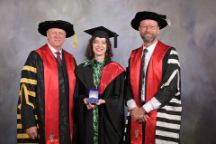
Associate Professor Anthony McCosker, part of the Swinburne Social Innovation Research Institute, was awarded the Vice-Chancellor’s Engagement Award - Industry Engagement for his research on unlocking the power of digital inclusion and social data
Anthony tells us about his research projects and how technology can be used for good.
How did it feel to be nominated for the Industry Engagement VC’s Award by your colleague? What does this award mean to you?
I work mainly with non-profit organisations in the community and health sectors, and like Swinburne staff, it was a difficult year for all, including our research partners. The award offers some recognition for the collective hard work and team successes.
Can you tell us about the projects that you won the award for?
My part in this is about steering our partners through the issues that come with the rapid pace of society-wide digital transformation. This has included working with the federal government and Good Things Foundation to ensure that the national program Be Connected is effective in building the digital skills, confidence and literacy of older Australians. I have also worked with mental health organisations including Beyond Blue and SANE Australia to improve online support through their digital platforms.
How can technology be used to better our world rather than hinder it?
Unfortunately, the default goal of many of the digital technologies and platforms shaping our society and economy tends more toward profit, rather than solving social problems and improving wellbeing. When basic services go online only, new social problems and exclusions occur. In my research, I work directly with organisations that are closest to the most vulnerable in our communities. I’m driven by the idea that together we can find solutions that can hopefully transform what technology can do for the people who need it most. We see so many people marginalised by the same digital technologies and communication platforms that are informing and connecting others.
What other projects would you like to work on in the future?
We are on the edge of some significant society and economic changes associated with developments in artificial intelligence (AI), automated decision-making systems and advanced data analytics. Over the coming years, our work in the Social Innovation Research Institute and Centre of Excellence for Automated Decision-Making and Society will focus on managing the discrimination, bias, marginalisation and other issues these technologies can embed in our society.
What do you enjoy the most about working at Swinburne?
Swinburne has the feel of a large country town – with all the friendliness, strong sense of community, and fresh air that implies. I love that it’s a powerhouse of research in technology, and is driving the innovation agenda, but also cares deeply about the social, cultural and personal impact of technology.
What helped you navigate 2020 and stay connected to Swinburne and your colleagues?
Like most, I’ve had to adapt to working from home, via video conferencing, regularly navigating dodgy internet connections and systems failure. You’ve got to have a decent amount of patience and a good sense of humour sometimes to cope under these conditions. Good channels of communication are key!
Recommend your favourite: dinner to cook at home, podcast, book, TV show/movie, social media follow?
Over lockdown, I really began to enjoy slower cooking and loved the work of ‘Nat’s What I Reckon’. Nat is a content creator, comedian, rock musician, isolation cooking champion and mental health ambassador. His shepherd’s pie got me through the long COVID-19 winter. More recently Lupin on Netflix has given me joy. The show has a great combination of digital expertise and race politics, with hacking the system to fight injustice – what more do you want?.
-
Media Enquiries
Related articles
-
- Student News
- Technology
- Science
- University
Swinburne awards 2025 University Medals to outstanding students
From cutting‑edge science and technology to world‑leading research, three Swinburne students from the School of Science, Computing and Emerging Technologies have been recognised with the prestigious 2025 University Medal
Thursday 16 April 2026 -
.jpg/_jcr_content/renditions/cq5dam.web.256.144.jpeg)
- Health
Swinburne and batyr welcome Prince Harry and Meghan, Duke and Duchess of Sussex for youth mental health event
Swinburne has helped bring global attention to youth mental health, with Prince Harry and Meghan attending a workshop hosted by batyr at Swinburne’s Hawthorn campus.
Thursday 16 April 2026 -

- Technology
- University
Swinburne secures national funding to boost heavy vehicle safety with real-time hazard detection
Swinburne researchers will develop real-time technology that helps heavy vehicles detect at-height hazards, improving road safety across Australia.
Thursday 12 March 2026 -

- Astronomy
- Film and television
- Social Affairs
MTC Future Aspirations camp blends STEM and Indigenous culture
The Moondani Toombadool Centre hosted 25 Aboriginal and Torres Strait Islander high school students at its recent Future Aspirations Camp, where it blended cultural activities with university experiences
Monday 02 March 2026 -
- Technology
- Science
- Sustainability
- Engineering
Swinburne’s international collaborations driving meaningful impact
Swinburne is collaborating with international researchers to tackle global challenges in clean energy, sustainable materials and energy-efficient buildings.
Monday 16 March 2026


