

Leftist mob bullying should be designated a 'hate speech' crime

‘It is modern-day barbarism to insist that suffering should be inflicted’ on people like Margaret Court for their views. Picture: Danella Bevis/The West Australian
In summary
Analysis for The Australian by Professor Mirko Bagaric, Swinburne University of Technology
Mob punishment isn’t the way to enlightenment. The call to rescind Margaret Court’s Australia Day honour is the most recent example of a disfigured moral code that is dispiritingly becoming a part of mainstream discourse. A legal solution is necessary.
Words have no tangible force. They never directly cause harm. Tolerance for the expression of views and absolute intolerance for the infliction of harm outside the boundaries of the legal system are universal ethical norms and pillars of democracy. We are being morally and intellectually diminished as a society by allowing these principles to be violated.
The desire to hurt people who express contrary views (typically by demanding that they should be sacked or removed from positions or stripped of titles and honours) is immoral, hypocritical and represents a misunderstanding of the complexity of human character.
The last decade has witnessed an increasing polarisation of political and social ideology, broadly in line with the left and right divide. Never have we seen unpopular words attract such high levels of hostility. In the big picture this is a happy First World problem. People only have the energy to mercilessly shout down opponents in a post-material world where nearly all major problems that directly damage human flourishing have been fixed. People living in Third World countries have real issues and don’t habitually troll the internet and organise petitions against their perceived ideological adversaries.
However, a disturbing trend to emerge recently is the inclination of people to reduce and define others totally by reference to one standpoint. This is brutally flawed. People are complex and one view says little about a person’s character or value system.
Ethically, the position is even more objectionable. The base position is that all people are entitled to be treated with concern and respect — the only exceptions are people who commit serious criminal offences. A striking paradox that has emerged regarding the treatment of fellow citizens is that the political class that most strongly identifies with the need for social justice and tolerance is now most disposed to want to harm people to further its objectives. Mob vigilantism is now a standard strategy for many left-leaning activists to deal with people who have opposing views. The sanctimony associated with pursuing self-declared noble causes regrettably often shuts down the cognitive side of the brain where the principle against harming others is anchored.
Even former US president Barack Obama recently urged the “callout woke” crowd to become less judgmental. He stated that the “idea of purity and that you’re never compromised and you’re always politically woke — you should get over that quickly”. He added: “The world is messy. There are ambiguities. People who do really good stuff have flaws. People who you are fighting may love their kids, and share certain things with you.”
Even more disturbing than typecasting people on the basis of their views or censoring them is the now fashionable obsession to want to damage people who express contrary views. Thus, we often hear loud calls for people to be sacked or stripped of entitlements if they dare voice unpopular views. Margaret Court, Israel Folau and JK Rowling are some of many recent examples. Calls for deprivations to be imposed on such people violate the most basic norms of human civility.
I strongly disagree with the views expressed by these people. I was one of the first public commentators to advocate in favour of same-sex marriage. While I disagree with these people on some issues, they’re not wicked and, in fact, have made a prodigious net contribution to society. It is appropriate to challenge forcefully and criticise their views but it is modern-day barbarism to insist that suffering should be inflicted on them for expressing beliefs that do not breach any legal standards.
There are certain forms of expression that violate the legitimate bounds of free speech. And when the limits of free speech are exceeded, people deserve to be sanctioned for such behaviour.
But there is only one mechanism through which deprivations should be inflicted on people for expressing unpopular or controversial views. And this stems from the application of legal standards.
Australia has some of the strictest legal prohibitions in the world against “hate" speech. It is unlawful for people to incite hatred or ridicule people on the basis of traits including race, religion and gender. People who flout these restrictions can be subject to civil and criminal penalties.
In a society governed by the rule of law, it is repugnant to seek to punish others for their views beyond the operation of the law. People work hard and long to establish careers, businesses and reputations. In some situations they deserve to have these interests diminished or taken from them. But, given the centrality of these interests to human flourishing, they can only be set back by the operation of legal standards.
Calls for people to be deprived of any interests or entitlements outside the legal process on the basis of supposedly inappropriate comments is nothing other than the expression of unhinged anger that in nearly all cases is more harmful than the viewpoint being expressed. The extent to which freedom of expression should be appropriately limited is a complex moral and legal problem. It should be extended to prohibit speech that calls for people to be materially damaged for expressing lawful views.
Absent legislative reform of this nature, the scourge of internet mob violence will blossom unabated and society will continue to get less intelligent as a result of the inability to hear opposing voices and the absence of opportunity to correct, rationally and effectively, inappropriate views — such as those expressed by Court on LGBTI issues.
This article is republished from The Australian. Read the original article.
-
Media Enquiries
Related articles
-

- Design
- Technology
- Health
- Law
- Education
- Business
- Science
- University
- Engineering
Swinburne moves up in Times Higher Education World University Rankings by Subject 2026
Swinburne University of Technology has performed strongly in the Times Higher Education World University Rankings by Subject 2026, with two subjects moving up the ranks.
Thursday 22 January 2026 -

- Student News
- Law
Students tour South Korea’s evolving legal landscape
Swinburne University of Technology’s law students recently undertook a two-week study tour to South Korea, focused on legal affairs, political systems and local customs. The group of 14 students, led by Dr Jacqueline Meredith, took part in an immersive educational experience designed to deepen their understanding of international legal systems.
Thursday 07 August 2025 -
- Law
Top Law Student Awarded Supreme Court Prize
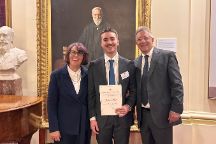
Swinburne graduate, Zachary Plant, was presented with the Supreme Court Prize by Chief Justice Richard Niall and Federal Court Chief Justice Mortimer for academic excellence, as Swinburne’s top Law student for 2024.
Monday 14 July 2025 -

- Law
Students develop tech solution for major Melbourne law firm
Swinburne Law students have created an innovative triage tool to streamline Australian Consumer Law assessments for major consumer products law firm, CIE Legal.
Monday 14 July 2025 -

- Law
How Swinburne Law School helped one alum find his calling
By embracing all the real-world experiences that Swinburne Law School had to offer including internships and overseas opportunities, Josh is now thriving in a career he genuinely loves.
Tuesday 17 June 2025


