

With democracy paused, Big Brother runs Victoria

The focus of pandemic laws must be to stop activities that result in human congestion, not those that restrict movement, says Professor Bagaric.
In summary
- Opinion piece for The Australian by Dean of Swinburne Law School, Professor Mirko Bagaric
COVID-19 is not transmitted by human “movement”; its transmission is facilitated by human contact. The inability of Premier Daniel Andrews to understand this simple distinction has resulted in more than five million Victorians being subjected to the longest, and most oppressive lockdown on the planet. It is the reason so many Victorians are questioning tyrannical restrictions on their freedoms, which are imposed by an increasingly radical leader.
The world is more than six months into the pandemic and, while the science in relation to COVID-19 is not fully settled, one incontestable truth is that it spreads through human-to-human contact. Human congestion, especially indoors, facilitates the spread of the virus. The way to suppress the spread of the virus is to break the chain of infection. That’s why all developed countries have adopted social distancing protocols.
Victoria stands apart. Andrews has taken the unique approach of trying to defeat the virus by reducing human movement. But it has been ineffective. When Victoria went into a state of emergency it had 59 active COVID-19 cases. Today it is more than 1000.
Research shows that coercion is only one method of securing compliance with the law. The far more effective means is by drawing up laws that have moral and social legitimacy. And it is on this front that the Victorian government is starting to lose the battle.
The government challenges common sense by prohibiting activities that have a near-zero chance of infection. Single-person real estate inspections, lawnmowing, playing golf and tennis and taking your dog for a walk after 9pm won’t spread this virus. At the same time, the government allows horse racing – with jockeys side by side for the entire race – and a dozen people to meander around a bottle shop. Such glaring anomalies undermine community trust in the Andrews government.
The government will seek to justify the harsh lock down by stating that movement is a proxy for contact. But even our children understand that not all movement involves danger and understand the nuanced differences in the forms of movement in their risk calculus. That’s the reason we teach four-year-olds to watch out for cars on roads but to play freely in their yards.
And it is the reason the singular focus of pandemic laws must be to stop activities that result in human congestion; not those that restrict movement. Whether a person buys a coffee at their local coffee shop or drives solo 20km without stopping to his or her favourite coffee shop carries the identical infection risk. Indeed, driving for a coffee involves reduced risk if that shop happens to be less busy.
Confusing movement with congestion is the reason the Victorian government’s pandemic strategy is only by degrees more sensible than killing the virus by killing the host, metaphorically at least. The reality is that too many freedoms we take for granted have been stripped from Victorians. Other than China’s brutalised and imprisoned Uighurs, Victorians may be the most oppressed community in the world. People living in North Korea and most of China have more rights and freedoms than Victorians – and they too are responding to COVID-19. Their children can attend schools, they are allowed outdoors after 9pm. Their police, armed with guns, don’t handcuff pregnant women in their pyjamas in their kitchens while her children look on. Nor do they drag defenceless terrified women from cars at checkpoints.
This embarrassing state of affairs has occurred because democracy has been paused in Victoria and all power has been vested in one supreme agent – Andrews, whose cognitive powers seem overwhelmed by an emotional obsession with a single objective: to reduce COVID-19 infections.
Predictably, this emotional alarm has infected other government agencies. Police command, sounding like some skateboarding teen with a cap on backwards, labelled ordinary law-abiding Victorians opposed to the lockdown as “batshit crazy”. It was a puerile response and oversteps their role.
This politicisation of the police highlights the dangers inherent with introducing Big Brother laws. Migrants to Melbourne who survived martial law under communist dictatorships are now feeling the same helplessness as they did in their home countries. On this page last week Jack Mordes likened modern-day Melbourne to the Polish dictatorship his family fled in 1981. And the left (which went into meltdown in the Kennett era when police were photographed applying pressure holds on protesters) remain oddly silent about laws that have deprived most Victorians of their physical and emotional dominion.
Reducing the spread of COVID-19 is an admirable goal. It kills about 3 per cent of those infected with the virus and it is particularly dangerous for those in aged care. But much of life is about trade-offs and managing risks from the economic to the social. Indeed, it is possible Victoria’s lockdown will cost lives because of the 25 per cent fall in hospital emergency admissions and more than 30 per cent fall in cancer tests.
The cost of each year of life saved by the much shorter New Zealand lock down is $8m. That figure is much higher in Victoria. The government would never budget to spend such sums to preserve life.
Andrews lauds the recent decline in daily infections. But that cannot justify this crude lockdown. Every country in the world can achieve the same result. All they need to do is barricade the doors and windows of their citizens. None are now doing so. They all realise the price is too high.
Last year Victoria became the first Australian jurisdiction to allow people to commit assisted suicide. Death with dignity is important to Andrews. Life with dignity less obviously so.
This article was republished with permission from The Australian. Read the original article.
-
Media Enquiries
Related articles
-
- Design
- Technology
- Health
- Law
- Education
- Business
- Science
- University
- Engineering
Swinburne moves up in Times Higher Education World University Rankings by Subject 2026
Swinburne University of Technology has performed strongly in the Times Higher Education World University Rankings by Subject 2026, with two subjects moving up the ranks.
Thursday 22 January 2026 -

- Sustainability
Threatened by a damning climate future, women in leadership could save Australia’s tourism and hospitality sector, research finds.
New Swinburne research found that women leaders aid better environmental policies, resource use, lower emissions, and drive environmental innovation..
Monday 13 October 2025 -
- Student News
- Law
Students tour South Korea’s evolving legal landscape
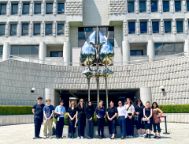
Swinburne University of Technology’s law students recently undertook a two-week study tour to South Korea, focused on legal affairs, political systems and local customs. The group of 14 students, led by Dr Jacqueline Meredith, took part in an immersive educational experience designed to deepen their understanding of international legal systems.
Thursday 07 August 2025 -
- Law
Top Law Student Awarded Supreme Court Prize
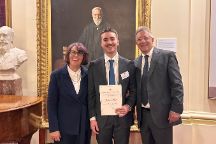
Swinburne graduate, Zachary Plant, was presented with the Supreme Court Prize by Chief Justice Richard Niall and Federal Court Chief Justice Mortimer for academic excellence, as Swinburne’s top Law student for 2024.
Monday 14 July 2025 -
- Law
Students develop tech solution for major Melbourne law firm
Swinburne Law students have created an innovative triage tool to streamline Australian Consumer Law assessments for major consumer products law firm, CIE Legal.
Monday 14 July 2025


