

Swinburne software engineering graduate nominated for space award

Mikaela Verhoosel participated in a range of programs and experiences while studying at Swinburne
In summary
- Swinburne graduate Mikaela Verhoosel was a finalist for ‘Graduate of the Year’ at the Australian Space Awards 2021
- Mikaela was a mentor for high school students in the Swinburne Youth Space Innovation Challenge, alongside fellow Swinburne finalist and astrophysicist, Dr Rebecca Allen
- As a software engineer at Geoplex, Mikaela is working on a satellite communication asset management tool for the Department of Defence
Swinburne software engineering graduate, Mikaela Verhoosel, has been shortlisted for ‘Graduate of the Year’ at this year’s Australian Space Awards.
Mikaela graduated from the Bachelor of Robotics and Mechatronic Engineering (Honours) in 2018. During her studies, she was an active volunteer and mentor – taking on experiences that enriched her time at Swinburne.
Mikaela volunteered as a mentor for the Swinburne Youth Space Innovation Challenge (previously known as SHINE), which provides an opportunity for high school students to send experiments to the International Space Station and inspires them to imagine a career in space.
As a mentor, she supported students around the fabrication and feasibility of design, microcontrollers and programming.
‘It demonstrates what can be possible, not only for the students to learn about the full cycle of an experiment but the real-life struggles of bringing a design into a fully functioning prototype,’ she says.
As Swinburne’s campus coordinator for Engineers Australia, Mikaela also helped to contribute to the professional and personal development of engineering students by involving them in activities run by the organisation.
Swinburne stars at Australian Space Awards
Mikaela was one of three Swinburne finalists in this year’s Australian Space Awards, which celebrate the efforts of the best and brightest in the Australian space industry and recognise the leading individuals and businesses driving the development of Australia’s space economy.
Leader of Swinburne Youth Space Innovation Challenge, Dr Rebecca Allen, was shortlisted for ‘Space Education and Outreach Program of the Year’. It was Dr Allen that suggested Mikaela should apply.
‘Being shortlisted came as a surprise. It is a great opportunity to reflect on past achievements and look to the future of what is next to come,’ says Mikaela.
International Lawyer and Space Research scientist, Kim Ellis was a finalist for the ‘Academic of the Year’ category.

Dr Rebecca Allen (right) was shortlisted for her work with the Swinburne Youth Space Innovation Challenge
Following your dreams
Mikaela is enjoying her role as a graduate software engineer at professional services consulting company Geoplex, where she is working on a satellite communication asset management tool for the Department of Defence called ‘TacPlanner’.
‘I hope to continually challenge myself professionally and personally to eventually lead projects that will bring about positive change,’ she says.
She loves her job, including its challenges.
‘Like any career, there will be highlights and days that leave you wanting to pursue a nomadic van life. Know that both days are two sides of the same coin and by wading through you will come out a stronger individual.’
Mikaela believes diversity in STEM fields is important so that solutions cater to everyone. She hopes anyone interested in STEM follows their passion, saying ‘hard work and seizing opportunities’ are the best ways to advance your career.
‘If this is a career you are thinking of pursuing, then what I would do is to not let your fears overcome your desire to join what is a great industry and community.’
-
Media Enquiries
Media Enquiries
Related articles
-
Swinburne researchers contribute to nearly $20 million in ARC-funded projects
- Design
- Technology
- Science
- University
- Sustainability
- Engineering
Swinburne researchers are contributing to four successful projects in the latest Australian Research Council (ARC) Industrial Transformation Research Program, representing nearly $20 million in combined project funding.
Tuesday 20 October 2026 -
Swinburne JWST collaboration to receive prestigious 2027 Berkeley Prize from American Astronomical Society
- Astronomy
- Science
- University
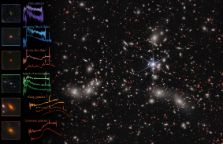
Swinburne leads the international team who have been awarded the American Astronomical Society’s 2027 Lancelot M. Berkeley Prize for the UNCOVER project
Friday 18 September 2026 -
Swinburne continues to rise in global subject rankings

- Technology
- Health
- Education
- Science
- University
- Engineering
Swinburne has achieved strong results across 26 subjects in the ShanghaiRanking’s Global Ranking of Academic Subjects 2026.
Thursday 17 September 2026 -
Swinburne joins global biomaterials research training program

- Technology
- Health
- Science
- University
- Engineering
Swinburne has joined the prestigious German Research Foundation-funded International Research Training Group (IRTG) on Multidimensional Biomaterials (MB)2 program
Monday 17 August 2026 -
Rare ultra-magnetic star the key to solving a quantum cold case
- Astronomy
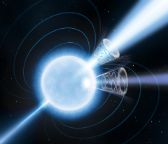
A Swinburne astronomer may have just confirmed one of the quirkiest aspects of quantum mechanics: that seemingly empty space can alter the behaviour of light.
Thursday 06 August 2026


